Technology leadership that speaks your language.
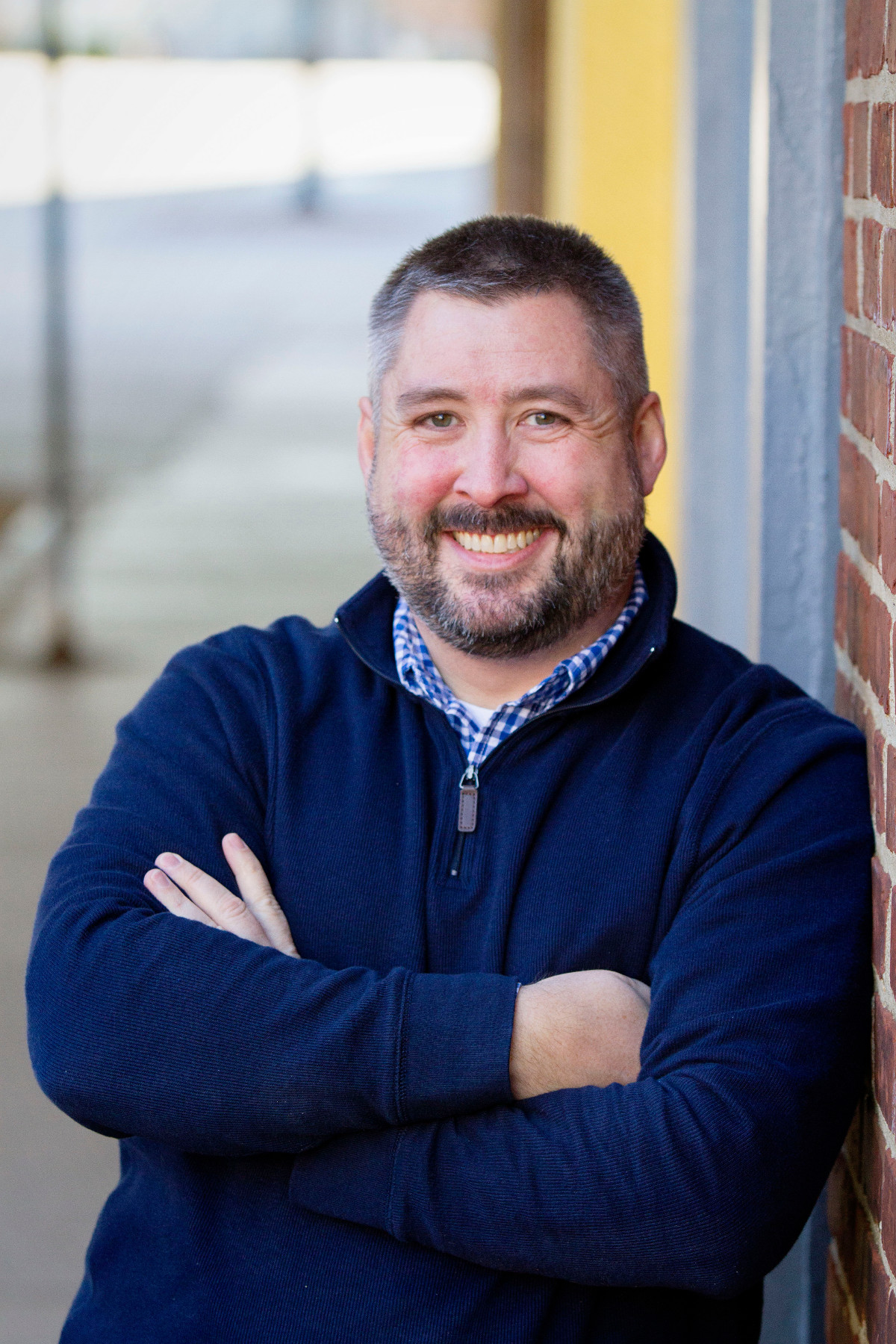
I'm Michael Faas, and I help growing businesses navigate the complex world of technology and security. My mission: translating technical complexity into clear, actionable strategy.
20+ years in the trenches
With over 20 years in enterprise technology and security, I've worn many hats: software engineer, security analyst, team lead, and technology executive. I've built systems that scale, led teams through complex projects, and helped organizations navigate everything from cloud migrations to security incidents.
But what I've found most valuable isn't the technical knowledge itself - it's the ability to bridge the gap between technology teams and business leadership. Too often, critical technology decisions get lost in translation, and that's where things go wrong.
That's why I started Echo Cyber. I saw too many growing businesses struggle with the same challenge: they needed strategic technology and security guidance, but couldn't justify (or find) a full-time executive. The fractional model solves that problem.
Why most technology initiatives fail
Most leaders think they have a complicated technology problem. They actually have a complex one. And that confusion is expensive.
Complicated is a jet engine. Thousands of parts, incredibly intricate, but fundamentally predictable. You can disassemble it, understand every component, troubleshoot when it breaks. More expertise equals more control.
Complex is an ecosystem. The parts don't just connect—they interact, adapt, and create behaviors that can't be predicted by studying the pieces. Remove one thing and maybe nothing happens. Or maybe everything collapses. You won't know until it happens.
Here's the danger: they look identical from the outside.
That "straightforward" system modernization? Complex. The "simple" integration project? Complex. The reorg that was supposed to fix everything? Definitely complex.
Leadership sees a complicated problem and deploys a complicated solution—new software, reorganization, updated processes. But they've got a complex problem. The system absorbs the change, routes around it, and returns to equilibrium. Or worse, the intervention triggers something unexpected.
"The problem isn't that you're not smart enough. It's that you're using complicated-system thinking on a complex-system problem. Different game. Different rules."
I help leaders recognize which game they're actually playing—and navigate it with clear thinking instead of false certainty.
Three guiding principles
These shape how I work with every client.
Complex vs. Complicated
A system migration isn't a puzzle with one right answer. A security program isn't a checklist. These are complex challenges—interdependent, context-dependent, full of trade-offs. I help you navigate them as they actually are, not as vendors wish they were.
Translation, not jargon
Architecture decisions, risk assessments, vendor evaluations—none of it matters if your leadership team can't understand and act on it. I translate geek into human so the people making decisions actually know what they're deciding.
Signal over noise
Every vendor has a 'critical' solution. Every framework has 'essential' controls. I filter the noise and focus on what actually moves the needle for your business—whether that's a technology roadmap, a security investment, or a hiring decision.
Let's talk about your challenges.
Whether you're facing a specific technology decision or need ongoing strategic guidance, I'm happy to have a conversation about how I might help.
Get in Touch